
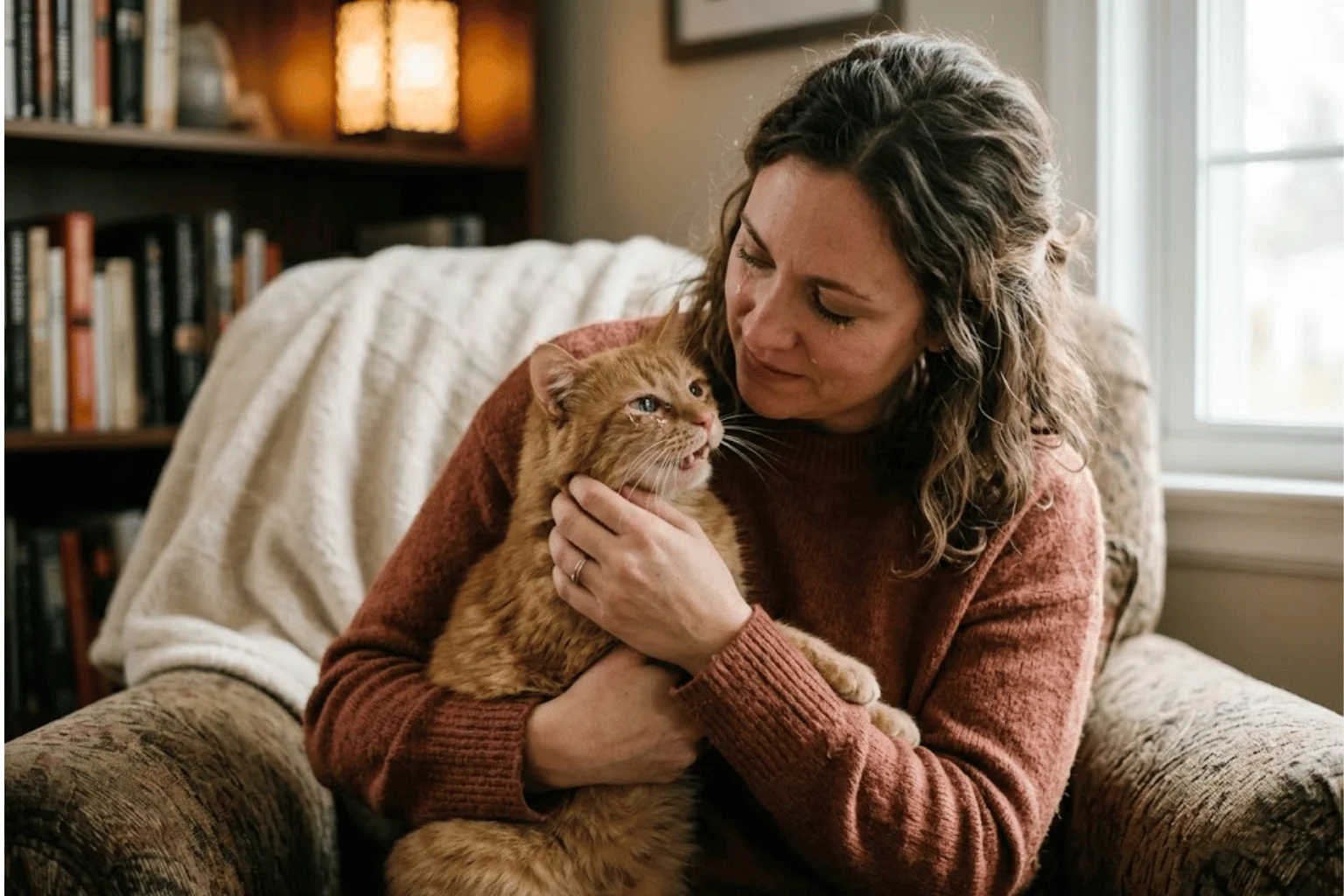

Seeing moisture around your cat’s eyes can be surprisingly emotional, especially when your pet also seems quiet, withdrawn, or unusually vocal. It is natural to wonder: can cats cry? Cats clearly experience fear, stress, attachment, discomfort, and other emotions. The important distinction is that feline tears do not appear to function as emotional tears in the same way human tears do.
Quick answer: Yes, cats can produce tears, but they do not appear to shed emotional tears the way humans do. Watery eyes usually indicate irritation, infection, injury, tear drainage problems, or another eye condition. Cats are more likely to show sadness, stress, or pain through meowing, yowling, hiding, changes in appetite, and body language.
Can Cats Cry Tears Like Humans?
Cats have tear glands and tear-drainage structures because tears are essential to keeping their eyes moist, comfortable, and protected. A normal film of tears lubricates the eye, while excess fluid usually drains through small nasolacrimal ducts near the inner corner of the eye. Researchers and veterinarians have not found evidence that cats produce visible tears in response to sadness, as people commonly do.
That does not mean your cat lacks emotions or cannot feel distressed. A sad, frightened, lonely, or uncomfortable cat may change how much it eats, sleeps, plays, grooms, interacts, or vocalizes. Cats primarily communicate those states through behavior, posture, facial cues, and sound rather than through emotional tears.
Why Does My Cat Look Like It Is Crying?
When tears overflow onto a cat’s face, veterinarians may describe the symptom as epiphora. Epiphora is not a disease by itself because it can result either from the eye producing too much fluid or from tears failing to drain properly. Persistent tearing, therefore, warrants attention to what else is happening around the eye rather than assuming the cat is feeling sad.
The most useful clues include whether one or both eyes are affected, how long the problem has lasted, and whether the discharge is clear, cloudy, yellow, green, or thick. Redness, swelling, squinting, frequent blinking, rubbing the face, sneezing, and a protruding third eyelid can provide additional clues. Because several different eye problems look similar at home, a veterinarian may need to examine the eye before the exact cause becomes clear.
| Possible cause | What you might notice | Why it matters |
|---|---|---|
| Irritation or foreign material | Clear tears, blinking, pawing at one eye | Dust, hair, debris, or another irritant may stimulate excess tears |
| Conjunctivitis | Redness, swelling, watery or thicker discharge | Viral, bacterial, environmental, and other causes are possible |
| Upper respiratory infection | Watery eyes with sneezing or nasal discharge | Respiratory infections commonly affect the eyes as well |
| Corneal scratch or ulcer | Squinting, pain, tearing, light sensitivity | Corneal damage can become serious without treatment |
| Poor tear drainage | Chronic wetness or staining below the eyes | Blocked ducts or facial anatomy may interfere with normal drainage |
| Glaucoma or another eye disorder | Pain, abnormal appearance, vision changes | Some eye diseases threaten comfort or vision and need prompt care |
1. Something Is Irritating the Eye
Dust, loose hair, plant material, airborne chemicals, and other irritants can cause the surface of a cat’s eye to water. The extra tears are part of the eye’s protective response and may help wash away small particles. If the tearing does not quickly settle or your cat keeps squinting and rubbing the eye, however, assuming the problem is minor can be risky.
Irritation can sometimes affect only one eye, particularly when a small foreign object or local injury is responsible. Both eyes may be affected when the trigger is present in the surrounding environment. Avoid putting human eye drops or unapproved home remedies into your cat’s eyes because the correct treatment depends on the actual cause.
2. Conjunctivitis Can Cause Watery Eyes
Conjunctivitis is inflammation of the tissue lining the eyelids and covering part of the eyeball, and Cornell describes it as the most common feline eye disorder. Affected cats may develop redness, swelling, frequent blinking, squinting, or discharge that ranges from clear and watery to darker and thicker material. Viral and bacterial infections are common causes, although environmental irritants and other factors can also contribute.
A veterinary examination is useful because conjunctivitis alone may not identify its cause. Treatment for a viral problem can differ significantly from that for an injury, a foreign object, or a bacterial complication. If your cat has persistent discomfort or discharge, getting the eye checked also helps rule out more serious conditions that can resemble routine conjunctivitis.
3. Respiratory Infections May Make a Cat’s Eyes Water

Upper respiratory infections are another common reason a cat can seem to be crying. Cornell notes that respiratory illnesses can cause eye discharge alongside sneezing, nasal discharge, conjunctivitis, reduced appetite, and lethargy. Young cats and animals living in shelters, breeding facilities, or other multi-cat settings can be particularly exposed to infectious respiratory agents.
The appearance of the discharge may change as the illness progresses or if more than one infectious agent is involved. A cat that is congested may also eat less because smell plays an important role in appetite. Eye symptoms combined with significant lethargy, breathing difficulty, dehydration, or refusal to eat should prompt veterinary advice rather than prolonged home monitoring.
4. A Corneal Scratch or Ulcer Can Trigger Tears
The cornea is the transparent outer surface at the front of the eye, and tears help nourish and protect it. Scratches, trauma, foreign material, and certain infections can damage this delicate surface, leading to substantial discomfort. A cat with corneal pain may squint, blink repeatedly, rub at its face, avoid bright light, or produce more tears than usual.
Eye injuries can be deceptive because a small surface defect may be difficult to see without veterinary equipment and specialized staining. Waiting for an obviously dramatic change is therefore not a good approach when a cat suddenly holds one eye partly closed. Prompt diagnosis gives a veterinarian the opportunity to protect comfort and vision while treating the underlying problem.
5. Tears May Not Be Draining Properly
Sometimes a cat produces a normal amount of tears, but the fluid cannot leave the eye through its usual drainage pathway. VCA explains that blocked ducts, debris, nearby hair, and anatomical differences can interfere with drainage, causing tears to spill onto the face instead. Persian, Himalayan, and other flat-faced cats may be particularly prone to chronic overflow because of their facial anatomy.
Long-term tearing can leave damp fur or reddish-brown staining beneath the eyes. Some cats experience mostly cosmetic staining, while others develop irritated skin or other problems that require veterinary management. A veterinarian can determine whether the issue is excess tear production, impaired drainage, or a combination of both.
6. More Serious Eye Disease Is Also Possible
Not every watery eye is a simple irritation or infection. Conditions such as glaucoma and other eye disorders can cause pain, abnormal appearance, tearing, or changes in vision. Cornell recommends paying attention to cloudiness, unequal pupils, unusual eye color, persistent tearing, and other changes because early treatment can sometimes protect vision.
This is one reason repeated tearing should not automatically be dismissed as a cat being emotional. Cats cannot tell you directly that pressure inside the eye has changed or that their vision suddenly feels different. Observing physical changes and seeking veterinary assessment when something looks wrong is far more useful than trying to interpret tears as sadness.
How Do Cats “Cry” When They Are Sad or Distressed?
Although cats do not usually express emotional distress with tears, they can certainly make sounds that people describe as crying. Long meows, yowls, howls, whines, or repeated calling may appear when a cat wants food, attention, access to a room, social contact, or relief from stress. Sudden vocal changes can also accompany illness, discomfort, confusion, or pain, so context matters.
Behavior can be even more informative than sound because many cats become quieter rather than louder when something is wrong. A distressed cat may hide more, stop playing, eat less, become unusually clingy, sleep in different places, or change its grooming and litter-box routines. AAHA also notes that cats commonly hide pain, meaning a lack of dramatic crying does not prove that a cat feels comfortable.
| What you notice | Possible explanation | What to consider |
|---|---|---|
| Repeated meowing near meals | Hunger, routine, learned attention-seeking | Check whether basic needs and feeding routine are met |
| Loud nighttime yowling | Attention-seeking, stress, boredom, mating behavior, confusion, or illness | Pay extra attention if the behavior is new |
| Hissing or growling | Fear, irritation, pain, or desire for space | Avoid forcing contact and look for the trigger |
| Hiding and becoming quiet | Stress, fear, pain, or illness | Changes from normal behavior deserve attention |
| Crying while using the litter box | Possible pain or urinary/digestive difficulty | Contact a veterinarian promptly, especially with urinary signs |
| New vocalization in an older cat | Pain, sensory changes, medical illness, or cognitive changes | Arrange a veterinary examination |
Can Cats Cry Because They Are Sad?
Cats can experience negative emotional states and behavioral changes associated with stress, loss, fear, or changes in their environment. What owners should not expect is a human-style stream of emotional tears that proves the cat is grieving or unhappy. Instead, emotional difficulties are more likely to manifest as changes in appetite, activity, social behavior, sleep, grooming, or vocalization.
Changes at home can sometimes explain these behaviors, including moving, adding another pet, changing schedules, or losing a familiar companion. Offering predictable routines, safe hiding places, appropriate play, and calm interaction can help many cats adjust. Readers interested in broader animal-care topics can also explore Scriify’s Pets section for additional pet-focused reading.
Can Cats Cry When They Are in Pain?
Pain can make a cat vocalize, but many painful cats do the opposite and become unusually still or quiet. Changes in jumping, walking, grooming, eating, sleeping position, social interaction, or tolerance for being touched may be more revealing than a dramatic cry. A sudden change in personality, therefore, deserves the same attention as obvious meowing or yowling.
A cat that cries when picked up, enters the litter box repeatedly, suddenly avoids jumping, or reacts when a particular area is touched may need a veterinary examination. Cats are skilled at concealing discomfort, so waiting for unmistakable screaming can delay treatment. Scriify’s guide explaining what veterinarians do and why their animal-care role matters provides additional background on professional veterinary care.
When Should You Call a Veterinarian About a Crying Cat?
A small amount of temporary clear moisture may disappear if a harmless irritant has already left the eye. Persistent tearing, obvious discomfort, colored discharge, significant redness, swelling, cloudiness, repeated pawing, or an eye being held partly closed deserves veterinary attention. Cornell advises owners to have any unusual eye changes checked promptly, as early treatment may prevent a condition from progressing.
Certain signs justify particularly prompt action because eye problems can worsen quickly. These include an obvious eye injury, sudden vision difficulty, severe swelling, bleeding, a cloudy eye, unequal pupils, inability to open the eye, or significant pain. A cat with eye symptoms plus breathing difficulty, severe weakness, or refusal to eat also needs more than routine home observation.
What Should You Do If Your Cat Has Watery Eyes?
The safest approach is to observe carefully without trying to diagnose the eye yourself. Note when the tearing began, whether it affects one or both eyes, what the discharge looks like, and whether your cat is squinting, sneezing, rubbing the face, eating normally, and behaving normally. That information can make a veterinary consultation much more useful.
- Look at both eyes in good light. Compare redness, pupil size, swelling, cloudiness, and discharge without forcing the eyelids open.
- Gently clean only the surrounding fur if needed. Use a clean, damp, soft cloth and avoid rubbing directly across the eyeball.
- Do not use human eye medication. Products that are safe for people may be inappropriate for cats or worsen certain eye injuries.
- Prevent persistent rubbing when possible. Pawing can further irritate or injure an already painful eye.
- Watch for symptoms elsewhere. Sneezing, nasal discharge, appetite loss, lethargy, vomiting, or behavior changes may help identify a broader illness.
- Contact your veterinarian if the problem persists or looks painful. Eye problems are easier to manage when the underlying cause is identified early.
Avoid putting hydrogen peroxide or other harsh cleaning products near a cat’s eyes. VCA specifically warns that products used around the eye can cause injury if unsuitable ingredients accidentally enter it. Even apparently simple tear staining should be managed with products recommended for that particular cat rather than a random home remedy.
Do Kittens Cry More Than Adult Cats?
Kittens often vocalize frequently because sound helps them communicate needs such as hunger, cold, fear, separation, or discomfort. A newly adopted kitten may call repeatedly while adjusting to unfamiliar people, smells, rooms, and routines. Frequent vocalization can therefore be behavioral, but very young kittens also deserve careful observation because illness can progress quickly.
Watery eyes in kittens should not simply be interpreted as homesickness. Cornell notes that conjunctivitis occurs especially often in younger animals and in environments where many cats live together. A kitten with eye discharge, sneezing, poor appetite, or lethargy should be assessed according to veterinary guidance. Those signs call for a check-up rather than being dismissed as simple crying.
Frequently Asked Questions
Can Cats Cry Tears When They Are Sad?
Cats can have watery eyes, but current veterinary guidance does not consider those tears an emotional response equivalent to human crying. Sadness or stress is more likely to appear as hiding, reduced interest in play, changes in appetite, altered social behavior, or unusual vocalization. If your cat has actual tears running down its face, consider an eye or health issue first.
Why Is My Cat Crying Actual Tears?
Visible tears can result from irritation, inflammation, infection, injury, poor tear drainage, or another eye condition. Veterinarians call excessive tear overflow epiphora, and determining its cause can require an eye examination. Persistent wetness, redness, squinting, or discharge should therefore be discussed with your veterinarian.
Why Does My Cat Cry at Night?
Nighttime meowing can happen because a cat is hungry, bored, seeking attention, stressed, or reacting to a change in routine. Older cats may also develop medical or age-related changes that alter nighttime behavior. A sudden increase in yowling, especially when accompanied by other behavioral or health changes, is worth discussing with a veterinarian.
Do Cats Cry When They Miss Their Owners?
Some cats show behavioral signs of stress when their routine or access to familiar people changes. They may meow more, wait near doors, become clingier, hide, eat differently, or alter their activity, but watery eyes are not considered proof that they miss someone. Consistent routines, enrichment, and calm interactions can help as you monitor for signs of a medical problem.
Should I Wipe My Cat’s Watery Eyes?
You can gently remove moisture or debris from the fur around the eye with a clean, soft, damp cloth if your cat tolerates it. Do not scrub the eyeball or substitute cleaning for veterinary care when redness, pain, swelling, or recurring discharge is present. Persistent tearing requires an explanation, as cleaning the fur does not address the underlying cause.
The Bottom Line
So, can cats cry? Cats can produce tears and can vocalize in ways that sound like crying, but visible tears generally reflect eye lubrication, irritation, illness, injury, or drainage problems rather than an emotional response like human crying. Pay attention to your cat’s eyes and behavior together, and contact a veterinarian when tearing persists, the eye looks painful or abnormal, or your cat’s normal habits suddenly change.
Veterinary note: This article provides general educational information for U.S. cat owners and is not a diagnosis or substitute for veterinary care. Eye problems can have several causes that look similar without an examination. Contact a licensed veterinarian for advice about symptoms affecting your individual cat.
