

The best 60s cartoons helped transform American television from simple animated comedy into a much broader medium. The decade introduced family sitcoms, superheroes, science-fiction adventures, mystery stories, and memorable Saturday morning characters. Many of these shows still influence animation and pop culture today.
The 1960s produced enduring animated favorites such as The Flintstones, The Jetsons, Jonny Quest, and Scooby-Doo, Where Are You!. Hanna-Barbera became especially influential during this period. The decade also established formats that shaped American television animation for years afterward.
| Show | Premiere | Main Style | Why It Matters |
|---|---|---|---|
| The Flintstones | 1960 | Animated sitcom | Brought family sitcom storytelling into animation |
| The Yogi Bear Show | 1961 | Comedy | Turned a popular supporting character into a TV star |
| Top Cat | 1961 | Sitcom comedy | Mixed fast dialogue with urban ensemble humor |
| The Jetsons | 1962 | Futuristic sitcom | Presented a playful vision of space-age family life |
| Underdog | 1964 | Superhero comedy | Combined superhero action with child-friendly humor |
| Jonny Quest | 1964 | Action adventure | Used a more realistic adventure style |
| Atom Ant | 1965 | Superhero comedy | Mixed miniature heroics with broad comedy |
| Secret Squirrel | 1965 | Spy parody | Reflected the decade’s fascination with spy stories |
| Space Ghost | 1966 | Science fiction | Expanded television animation into cosmic adventure |
| The Herculoids | 1967 | Fantasy adventure | Blended science fiction with creature-driven fantasy |
| Birdman | 1967 | Superhero action | Added another major hero to Hanna-Barbera’s lineup |
| Fantastic Four | 1967 | Superhero | Brought Marvel’s famous team to television animation |
| The Archie Show | 1968 | Musical comedy | Connected comic-book characters with pop music |
| Wacky Races | 1968 | Racing comedy | Built comedy around a large recurring ensemble |
| Scooby-Doo, Where Are You! | 1969 | Mystery comedy | Established a lasting mystery-comedy formula |
Why 60s Cartoons Changed American Television
Television animation expanded quickly during the decade as networks searched for programs that worked across different audiences. Studios created family comedies, superheroes, spy spoofs, adventure programs, and Saturday morning entertainment. That variety helped animation move far beyond theatrical shorts shown on television.
Hanna-Barbera became one of the decade’s defining studios through its large collection of recognizable characters and formats. Other producers also experimented with comic-book heroes, musical concepts, and serialized adventures. The result was a decade where television animation developed a stronger identity of its own.
Modern viewers can see that influence throughout later American entertainment. Scriify’s guide to the best Joker portrayals shows how animated interpretations later became important alongside live-action performances. Animation had become a lasting part of mainstream character storytelling.
1. The Flintstones
The Flintstones premiered on ABC in 1960 and placed a familiar suburban family inside a comic Stone Age setting. Fred and Wilma Flintstone faced work, friendships, neighbors, and domestic problems that resembled contemporary American life. Prehistoric animals and machines supplied many of the show’s visual jokes.
The series became a major early example of television animation aimed beyond young children. Its sitcom structure helped establish a model that later animated family comedies could follow. Fred, Wilma, Barney, and Betty also became enduring American television characters.
2. The Yogi Bear Show
Yogi Bear gained popularity on The Huckleberry Hound Show before getting his own series in 1961. His stories usually involved clever attempts to acquire food while Ranger Smith tried to maintain order. Boo-Boo often served as Yogi’s cautious companion.
The simple premise gave the character a clear personality that worked across repeated stories. Yogi’s confidence and distinctive speech helped make him easy to recognize. He later appeared in numerous television programs, specials, movies, and other Hanna-Barbera projects.
3. Top Cat
Top Cat premiered in 1961 and followed a streetwise cat leading a small group of alley companions. Officer Dibble regularly tried to stop Top Cat’s latest money-making plan. The comedy depended heavily on dialogue, schemes, and character interaction.
Its urban setting set it apart from many animal comedies set in forests or fantasy locations. Top Cat behaved more like a sitcom hustler than a conventional animal protagonist. That approach gave the series a style closer to live-action television comedy.
4. The Jetsons
The Jetsons arrived in 1962 and imagined American family life in a technology-filled future. George Jetson lived with Jane, Judy, Elroy, Astro, and their robot housekeeper, Rosie. Flying vehicles, video calls, automated homes, and futuristic workplaces filled their daily routines.
The series was also historically tied to television’s transition toward color broadcasting. It became the first program ABC presented in color, although many households still watched monochrome televisions. Its visual design helped make the future feel bright, domestic, and approachable.
5. Underdog
Underdog premiered in 1964 and turned a mild character named Shoeshine Boy into a caped superhero. He regularly protected Sweet Polly Purebred and confronted colorful villains. The program mixed heroic action with comedy, rhymes, and exaggerated situations.
Its central joke came from placing traditional superhero storytelling inside an intentionally playful world. Children could follow the danger without losing the light tone. Underdog remains among the decade’s most recognizable animated superhero characters.
6. Jonny Quest
Jonny Quest premiered on ABC in 1964 and took a noticeably different approach to television animation. Jonny traveled with his scientist father, Race Bannon, Hadji, and Bandit during dangerous international adventures. Science fiction, espionage, monsters, and mysterious locations shaped many stories.
The artwork and human characters appeared more realistic than Hanna-Barbera’s earlier comedy programs. That visual approach suited the show’s action-focused storytelling and serious threats. The original production ran for one season before reruns, and later revivals gave it a much longer life.
7. Atom Ant
Atom Ant debuted in 1965 as a tiny superhero with enormous strength. He could fly, battle criminals, and handle threats far larger than himself. His adventures treated superhero conventions with a playful tone.
The concept worked because viewers immediately understood the contrast between his size and abilities. Episodes could move quickly from a simple problem into exaggerated action. Atom Ant became another example of Hanna-Barbera adapting superhero ideas for younger television audiences.
8. Secret Squirrel
Secret Squirrel also debuted in 1965 and parodied the spy craze surrounding American entertainment. The character worked as a secret agent, using gadgets and disguises, with help from Morocco Mole. Missions often placed familiar espionage ideas inside ridiculous situations.
The series reflected a decade filled with popular spy movies and television programs. Younger audiences could recognize the gadgets and secret missions without needing serious political plots. That combination made Secret Squirrel both a genre parody and a children’s adventure.
9. Space Ghost
Space Ghost reached television in 1966 and moved animated action into outer space. The masked hero fought interplanetary villains alongside Jan, Jace, and Blip. Spaceships, strange worlds, monsters, and futuristic technology drove the stories.
The program represented television animation’s growing interest in straightforward action rather than comedy alone. Its strong visual identity helped the character survive beyond the original run. Space Ghost later returned in dramatically different television formats.
10. The Herculoids
The Herculoids premiered in 1967 and combined science fiction with fantastic creatures. Zandor and his family protected their world with allies including Zok, Tundor, Igoo, Gloop, and Gloop. Each creature brought a different ability to the team’s battles.
This unusual mix gave the program a look unlike typical superhero stories. Its heroes depended on cooperation rather than one central superpowered character. That group structure helped make the series memorable despite its relatively short original run.
11. Birdman and the Galaxy Trio
Birdman and the Galaxy Trio debuted in 1967 as an action program containing separate heroic segments. Birdman drew strength from the sun and fought threats with assistance from Avenger. The Galaxy Trio handled adventures in another part of the program.
The series expanded Hanna-Barbera’s superhero output as comic-inspired television grew. It also showed how studios could package several characters under one title. Similar programming structures became familiar within Saturday morning schedules.
12. Fantastic Four
The animated Fantastic Four premiered in 1967 and adapted Marvel’s superhero team for television. Reed Richards, Sue Storm, Johnny Storm, and Ben Grimm used their different abilities against unusual enemies. Their relationships remained central to the stories.
The show helped bring established comic-book characters to viewers who might not read comics regularly. Television gave superhero publishers another path toward larger audiences. That relationship between comics and animation became much stronger during later decades.
Fans interested in how comic characters change across media can also explore Scriify’s Joker performance ranking. That article compares major animated and live-action interpretations. The same cross-media idea remains central to modern superhero entertainment.
13. The Archie Show
The Archie Show premiered in 1968 and brought Archie Comics characters into animated television. Archie, Betty, Veronica, Jughead, and Reggie appeared in stories built around school, friendships, relationships, and music. Songs became an important part of the format.
The program benefited from the growing connection between television and youth-oriented pop music. Its fictional band also gave the characters an identity beyond their comic stories. The formula helped inspire additional Archie-related television productions.
14. Wacky Races
Wacky Races arrived in 1968 with an unusually large group of competitors. Each character drove a distinctive vehicle while racing toward the finish line. Dick Dastardly and Muttley usually complicated the competition through elaborate cheating.
The show’s appeal came from personalities as much as racing. Viewers could quickly choose favorite drivers based on designs, vehicles, and comic behavior. Several characters became popular enough to appear in later productions.
That tradition of recognizable television creators and recurring franchises continues today. Scriify’s guide to Eric Kripke shows examines a much later era of American genre television. It offers another view of how memorable concepts can develop into larger screen franchises.
15. Scooby-Doo, Where Are You!
Scooby-Doo, Where Are You! premiered in 1969 and introduced one of animation’s most durable formulas. Scooby, Shaggy, Fred, Daphne, and Velma investigated frightening mysteries that usually had rational explanations. Comedy, clues, chase scenes, and disguised villains appeared repeatedly.
The structure proved flexible enough to support decades of new series, films, and reinterpretations. Later productions changed settings and character details while preserving the core mystery format. Few animated properties introduced during the decade have remained as continuously visible.
Which Classic Shows Should You Watch First?
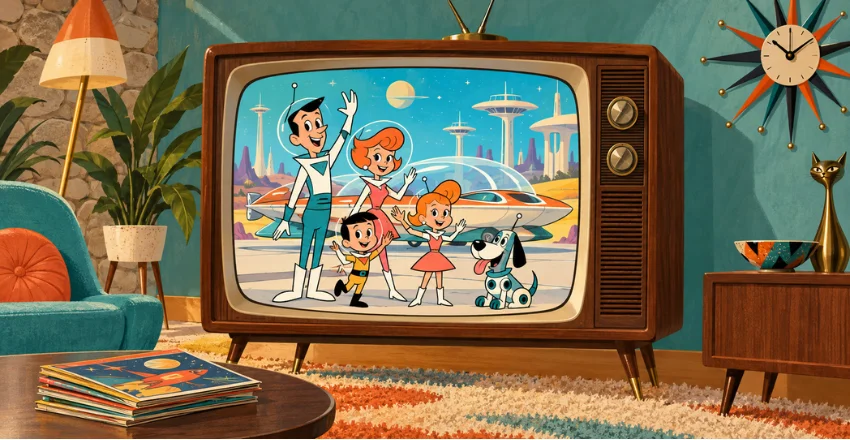
New viewers should start with The Flintstones for sitcom history and The Jetsons for futuristic comedy. Jonny Quest offers a stronger adventure focus, while Space Ghost represents superhero science fiction. Scooby-Doo, Where Are You! is the easiest choice for viewers who prefer mysteries and comedy.
Your next choice can depend on the type of television history that interests you. Top Cat works well for dialogue-driven comedy, while Wacky Races delivers faster ensemble humor. The Herculoids is a strong pick for viewers seeking something stranger and more action-focused.
Scriify covers both classic and modern entertainment topics in its entertainment section. Readers can move from older television history into actors, franchises, films, and newer programs. That makes it useful for exploring how American screen entertainment changed across generations.
What Made 1960s Animation So Distinctive?
Production limits strongly influenced the visual style of television animation during this period. Studios often reused backgrounds, poses, movements, and other elements to produce episodes for television schedules. Strong character designs and recognizable voices helped compensate for limited movement.
Writers also relied on formats viewers could understand quickly. A family sitcom, superhero mission, mystery, or chase could establish its central conflict within minutes. That efficiency made many programs especially suitable for reruns and syndicated television.
The decade also mixed older entertainment traditions with newer cultural interests. Sitcoms, comic books, the space race, spy fiction, pop music, and superhero stories all influenced animated television. These combinations produced formats that later studios continued developing.
Frequently Asked Questions
What are the most famous 60s cartoons?
The most famous titles include The Flintstones, The Jetsons, Jonny Quest, Space Ghost, and Scooby-Doo, Where Are You!. Yogi Bear, Top Cat, and Wacky Races also remain widely recognized. Different viewers may remember them through original broadcasts, reruns, home video, or later revivals.
Was The Flintstones made in the 1960s?
Yes, The Flintstones premiered on ABC on September 30, 1960. Its original run continued through 1966 and produced six seasons. The show later remained visible through reruns, spin-offs, films, merchandise, and new adaptations.
Was Scooby-Doo a 1960s show?
Yes, Scooby-Doo, Where Are You! began in 1969. That places the original series at the very end of the decade. The franchise then expanded through numerous later television series and films.
Were Saturday morning animated shows popular during the decade?
Yes, children’s television increasingly became associated with weekend morning programming during this period. Networks used animation because recurring characters worked well within scheduled children’s blocks. The format became even more established during the 1970s.
Which studio produced many famous shows from the decade?
Hanna-Barbera produced many of the era’s best-known American animated television programs. Its output included The Flintstones, The Jetsons, Jonny Quest, Space Ghost, and several other titles. The studio’s production approach strongly influenced later television animation.
Why These Shows Still Matter
The best animated programs from the 1960s remain useful because they show television animation changing in real time. Comedy expanded into science fiction, mysteries, superheroes, racing, music, and action-adventure. Studios discovered that recurring animated characters could support entire television franchises.
Those ideas still shape modern entertainment, even though animation technology and viewing habits have changed. Viewers can also compare classic screen history with later Hollywood careers through Scriify’s article on Robert Pattinson’s age during Twilight. Exploring different eras makes it easier to see how American popular entertainment keeps reinventing familiar formats.
