

Cat teeth are small, sharp, and easy to overlook until a dental problem appears. If you’re wondering how many teeth do cats have, the answer changes with age. Most adult cats have 30 permanent teeth, while kittens grow 26 temporary teeth before teething begins.
Adult cats normally have 30 permanent teeth, while kittens have 26 baby teeth. The adult set includes 12 incisors, four canines, 10 premolars, and four molars. Kittens lack molars in their temporary set. They replace their baby teeth as permanent teeth emerge during the first several months.
| Key fact | Kitten | Adult cat |
|---|---|---|
| Total teeth | 26 | 30 |
| Incisors | 12 | 12 |
| Canines | 4 | 4 |
| Premolars | 10 | 10 |
| Molars | 0 | 4 |
| Typical stage | Baby teeth | Permanent teeth |
| Upper jaw | 14 | 16 |
| Lower jaw | 12 | 14 |
Key Takeaways
- Kittens have 26 deciduous, or baby, teeth once their first set has fully erupted.
- Healthy adult cats normally have 30 permanent teeth.
- Adult teeth include 12 incisors, four canines, 10 premolars, and four molars.
- Baby teeth begin appearing within the first few weeks of life.
- Permanent teeth usually replace the baby set by roughly six to seven months.
- Missing adult teeth can result from disease, injury, or previous veterinary treatment.
How Many Teeth Do Cats Have at Each Life Stage?
Kittens are born without visible teeth, so their tooth count begins at zero. They later develop 26 deciduous teeth during their first weeks of life. Those temporary teeth eventually make room for a larger permanent set.
| Life stage | Typical tooth count | What is happening |
|---|---|---|
| Newborn kitten | 0 visible teeth | Teeth have not erupted yet |
| Young kitten | Up to 26 | Baby teeth are erupting |
| Teething kitten | Number varies | Baby teeth fall out as adult teeth appear |
| Adult cat | 30 | Permanent dentition is normally complete |
The change from 26 to 30 happens because the permanent set includes four molars. Baby kittens do not have molars in their deciduous dentition. The adult mouth therefore contains 16 upper teeth and 14 lower teeth.
The Four Types of Cat Teeth and What They Do
An adult feline mouth contains four different tooth types. Each shape suits a different part of gripping, cutting, or processing food. This specialized arrangement reflects the anatomy of a meat-eating animal.
| Tooth type | Adult count | Main location | Main role |
|---|---|---|---|
| Incisors | 12 | Front of the mouth | Gripping, nibbling, grooming |
| Canines | 4 | Beside the incisors | Gripping and puncturing |
| Premolars | 10 | Behind the canines | Cutting and shearing food |
| Molars | 4 | Back of the mouth | Cutting and processing food |
The 12 incisors are the tiny teeth visible between the larger canine teeth. Six sit in the upper jaw, with another six below. The longer canines are the prominent pointed teeth people often call fangs.
Premolars and molars sit farther back, so owners may rarely see them. Cats have six upper premolars and four lower premolars in their permanent set. They also have two upper molars and two lower molars.
When Do Kittens Get and Lose Their Baby Teeth?
Kitten teething happens quickly compared with human dental development. Deciduous teeth normally begin appearing when kittens are only a few weeks old. Timing varies slightly between individual animals and veterinary references.
| Approximate age | Dental development |
|---|---|
| Birth | No visible teeth |
| 2–4 weeks | Baby incisors begin appearing |
| 3–6 weeks | Baby canines and premolars emerge |
| 6–8 weeks | Most kittens have their full baby set |
| 3–4 months | Baby teeth begin falling out |
| 4–7 months | Permanent teeth erupt |
| Around 6–7 months | Adult set is usually complete |
You may never find the tiny baby teeth your kitten loses. Kittens can swallow some shed teeth during normal eating or grooming. Finding a small tooth during this period is also usually part of normal development.
A baby tooth sometimes stays in place after the permanent replacement appears. Veterinarians call this a retained or persistent deciduous tooth. VCA notes that retained teeth can contribute to crowding and an abnormal bite.
Why Might an Adult Cat Have Fewer Than 30 Teeth?
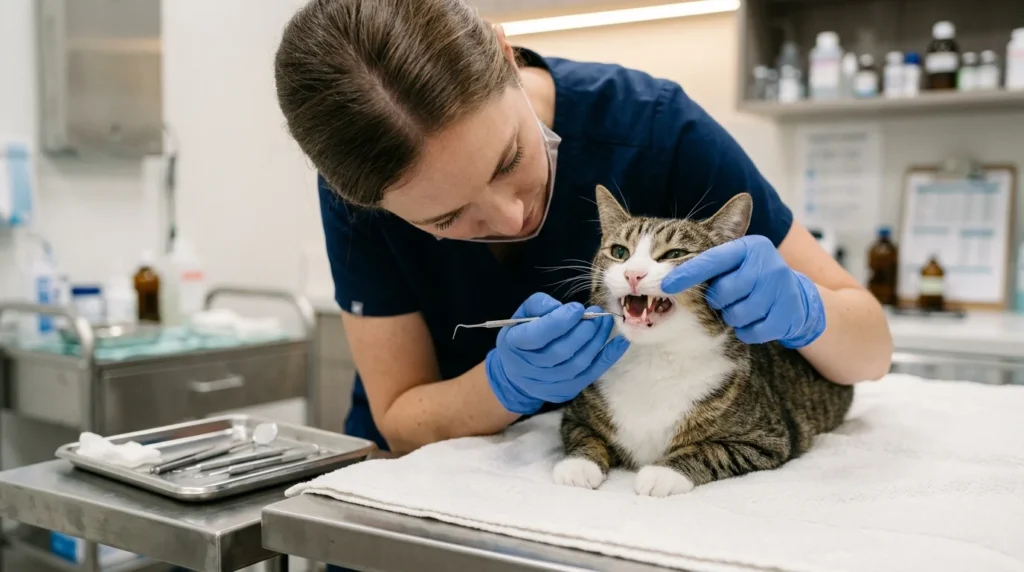
Thirty is the normal permanent count, but not every adult will still have all their teeth. Injury, dental disease, or previous extractions can reduce that number. Missing teeth should therefore be considered alongside the animal’s medical and dental history.
Periodontal disease and tooth resorption are important causes of feline dental problems. Cornell lists gingivitis, periodontitis, and tooth resorption among the most common dental diseases. Each condition can cause discomfort and may eventually require veterinary treatment.
Don’t dismiss losing permanent teeth as a harmless part of getting older. A new missing or loose tooth deserves veterinary attention. The underlying problem may affect other teeth that still appear normal.
Why the Number of Teeth Is Only Part of Dental Health
Knowing the normal count helps you understand your pet’s mouth, but appearance and comfort matter more. Cornell reports dental disease in 50% to 90% of cats older than four years. Regular observation can help owners notice changes before problems become harder to ignore.
Common warning signs include the following.
- Bad or suddenly worse breath
- Red, swollen, or bleeding gums
- Drooling
- Difficulty chewing
- Dropping food while eating
- Pawing at the mouth
- Reduced appetite
- Visible tartar
- Loose, broken, or missing teeth
- Changes in normal eating behavior
AAHA advises owners to seek a dental examination for signs such as bad breath, red gums, drooling, or eating difficulty. Cats can also hide pain rather than showing obvious distress. A subtle change in behavior can therefore matter.
Dental pain can overlap with other behavioral changes, including unusual vocalization or withdrawal. Scriify’s guide to why cats cry, vocalize, or seem distressed explains other signals owners may notice. Look at the whole pattern rather than relying on one symptom.
How to Keep Cat Teeth Healthy at Home
Home dental care helps limit plaque between veterinary examinations. AAHA recommends daily brushing as the most effective home method for reducing plaque buildup. Owners should use pet-specific products rather than human toothpaste.
A practical routine can include these steps.
- Introduce mouth handling gradually when your pet is calm.
- Use a soft pet toothbrush or another veterinarian-approved tool.
- Choose toothpaste made specifically for pets.
- Brush regularly, with daily care as the goal.
- Ask your veterinarian about dental diets, treats, or water additives.
- Watch for pain, bleeding, loose teeth, or changes in appetite.
Dental products vary widely, so packaging claims alone can be difficult to assess. The Veterinary Oral Health Council maintains a current list of accepted feline products for plaque or tartar control. Its 2026 list includes diets, treats, water additives, powders, and brushing products.
For broader background on professional animal care, Scriify also explains what veterinarians do and the skills their work requires. Your veterinarian can recommend a dental routine based on your pet’s mouth. That advice matters more when disease or previous extractions are already present.
Can You Count Your Cat’s Teeth at Home?
You can look at the front teeth without forcing the mouth open. The six upper and six lower incisors sit between the four prominent canine teeth. The smaller teeth toward the back are harder to inspect safely at home.
Keep the examination gentle because an uncomfortable animal may resist mouth handling. Do not force the jaw open or place your fingers between the back teeth. A veterinary oral examination gives a much clearer view of hidden problems.
Counting alone also cannot show what is happening below the gumline. AAHA notes that dental radiographs and complete below-gum examinations require professional veterinary care. A mouth can therefore look acceptable at home while still containing painful disease.
When Should a Cat See a Veterinarian for Dental Problems?
Arrange a veterinary examination when you notice a loose adult tooth, persistent bad breath, bleeding gums, or difficulty eating. Drooling and repeated pawing at the mouth also deserve attention. Sudden changes are especially useful to report because they provide context for the examination.
Seek veterinary advice if you notice any of the following.
- A broken or loose permanent tooth
- Blood around the mouth
- Swollen or inflamed gums
- Severe bad breath
- Refusal to eat
- Dropping food repeatedly
- Persistent drooling
- Facial swelling
- A baby tooth beside an emerging adult tooth
Dental disease can be painful even when a cat keeps eating. Cornell notes that oral disease can affect comfort and quality of life. Early assessment gives your veterinarian more options to identify and treat the cause.
Frequently Asked Questions
How Many Teeth Do Cats Have?
A healthy adult normally has 30 permanent teeth. Kittens develop 26 deciduous teeth before replacing them with their permanent set. Adult animals may have fewer after disease, injury, or necessary extractions.
Do Kittens Have Molars?
No, the normal kitten baby-tooth set contains no molars. Its 26 teeth include incisors, canines, and premolars. Four molars appear in the permanent adult set.
When Do Kittens Lose Their Baby Teeth?
Baby teeth generally start falling out at around three to four months. Permanent teeth appear during the following months as teething continues. Most young cats have their adult set by roughly six to seven months.
How Many Front Teeth Does a Cat Have?
Adult felines normally have 12 incisors at the front of the mouth. Six sit in the upper jaw, while six sit in the lower jaw. Four larger canine teeth sit immediately beside them.
Is It Normal for Adult Cats to Lose Teeth?
Permanent tooth loss should not be treated as normal simply because an animal is older. Dental disease, tooth resorption, trauma, and other problems can cause tooth loss. A veterinarian should examine unexplained loose or missing permanent teeth.
Are 30 Teeth Normal for Every Adult Cat?
Thirty represents the normal complete permanent set. Some healthy-looking adults may have fewer because a veterinarian removed teeth during earlier treatment. Their current dental health depends on more than the total number remaining.
The Bottom Line
Healthy adult cats normally have 30 permanent teeth, while kittens have 26 temporary teeth. The extra four adult teeth are molars that are absent from the baby set. Knowing those numbers makes normal teething and unexpected tooth loss easier to recognize.
Pay more attention to comfort and oral health than to the count alone. Check for gum changes, bad breath, eating difficulty, or loose teeth. Contact your veterinarian when something looks painful, unusual, or different from your pet’s normal behavior.
For more practical cat and companion-animal information, browse Scriify’s Pets section. Regular home observation works best alongside professional dental care. Together, they can help protect your cat’s mouth throughout adulthood.
