
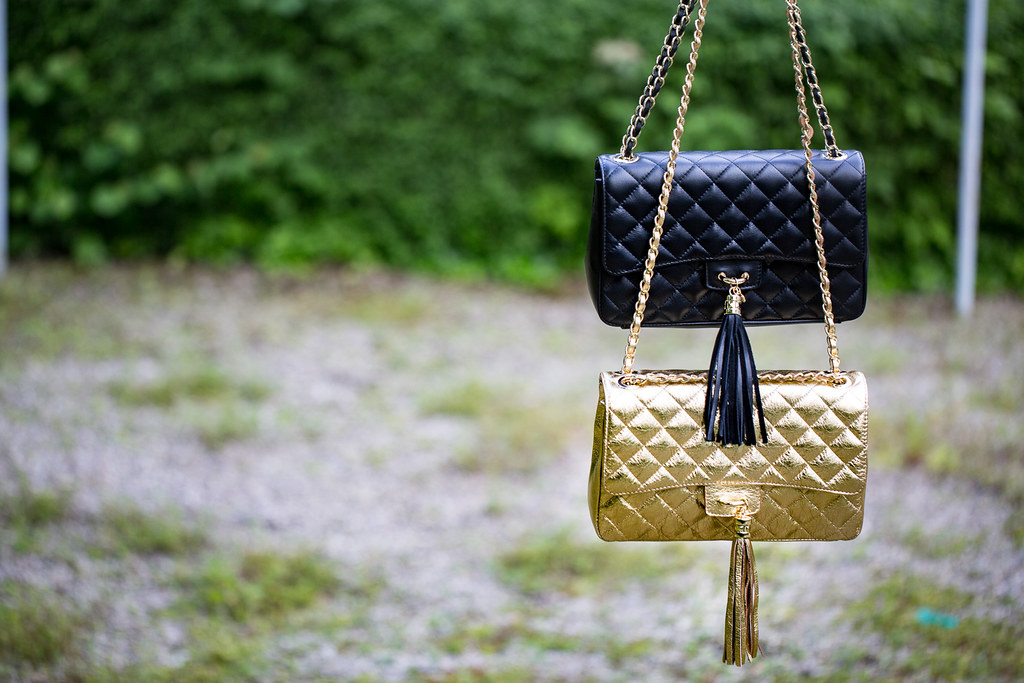

1—Where Sabrina’s Interest Began
Sabrina’s interest in fashion did not begin with clothing. It started with subtle visual elements that many people rarely paid attention to. When she walked through busy streets or sat in cafes observing people around her, she often noticed how accessories could influence the overall impression of an outfit.
Handbags were especially interesting to her.
Some people carried bags that immediately drew attention, while others prefer understated designs that complemented their clothes in a calmer way. Sabrina often wondered why certain bags seemed to fit perfectly with a person’s style while others felt less convincing.
Over time she realized that a handbag often shapes the visual structure of an outfit. The size, silhouette, and material influence how the entire look is perceived.
She began reading fashion magazines and watching interviews with designers. Many describe handbags as one of the most personal elements in fashion.
Unlike clothing, which changes frequently with seasons and trends, a handbag may stay with its owner for many years.
Sabrina also kept a small notebook where she wrote observations about shapes she encountered in everyday life. Sometimes it was the curve of a handbag handle, sometimes the contrast between leather and metal hardware.
These notes helped her understand why certain designs stayed in her memory. They often shared a sense of clarity. Nothing felt unnecessary, yet nothing seemed missing either.
She also began paying attention to how people carried their handbags rather than simply what they carried. The way someone held a bag, placed it beside them on a chair, or rested it on a table during conversation revealed subtle aspects of personal style.
Some people treated their bags with visible care, while others handled them casually as part of everyday routines.
Watching these differences helped Sabrina realize that handbags were not only visual elements in fashion. They were companions that followed people through many small moments during the day.
Over time this observation strengthened her appreciation for thoughtful design.
2—Seeing Accessories Differently
Sabrina’s understanding of fashion changed when she began working at a creative studio after graduation.
Her colleagues came from different backgrounds, and their personal styles reflected that diversity. Some focused heavily on clothing, constantly experimenting with new combinations. Others relied on carefully selected accessories to define their overall appearance.
One afternoon during lunch, a colleague mentioned an article discussing how designers create a luxury bag for women.
The article explained that the best handbags combine elegance with practical function. Designers consider proportions, materials, and structure so the bag can remain useful in many situations.
Sabrina found this perspective fascinating.
Instead of describing handbags as decorative additions, the designers treated them as central components of personal style.
This idea encouraged Sabrina to observe accessories more carefully.
She began noticing how a well-designed bag could introduce balance within an outfit without overwhelming the overall look.
During the following weeks she started paying closer attention to the bags carried by people around her. In meetings, on public transport, and in restaurants she noticed how different shapes created different impressions.
Some bags communicated professionalism and confidence. Others suggested creativity or spontaneity.
These observations helped Sabrina understand that accessories often communicate subtle messages about personal style.
3—Ideas Found Outside Fashion
As Sabrina continued exploring fashion, she discovered inspiration in places far beyond clothing stores.
Visits to museums and art exhibitions introduced her to ideas about proportion, structure, and composition. Sculptures, paintings, and architectural forms often rely on visual principles like those used in handbag design.
One exhibition left a particularly strong impression on her.
It displayed minimalist sculptures made from metal and stone. The pieces were simple yet powerful, relying on clean lines and carefully considered proportions.
Sabrina realized that many handbag designers approached their work in a comparable way.
Instead of relying on heavy ornamentation, they focused on form and structure.
The exhibition also showed her that strong design rarely depends on decoration alone.
Many sculptures used very simple forms yet still created striking visual impact. Their proportions were carefully considered, and every part contributed to the whole composition.
This reminded her of the handbags she admired most. The strongest designs relied on clear structure rather than excessive ornaments.
After leaving the exhibition, Sabrina continued thinking about the connection between art and fashion.
Artists often described proportion as one of the most important principles in visual composition. When shapes are arranged carefully, the entire piece feels complete.
Sabrina noticed that the handbags she admired most shared this same sense of proportion. Nothing felt exaggerated, and nothing seemed out of place.
This realization changed the way she looked at handbags.
They were not simply fashion accessories but small examples of thoughtful design.
4—Inside the Craft
Sabrina’s curiosity eventually led her to explore craftsmanship more closely.
She read interviews with designers who described the long process behind creating a luxury bag for women. The development stage often involved many revisions before the final design reached production.
Material selection, stitching techniques, and structural adjustments all played a role in shaping the finished bag.
Even minor changes in proportion could influence how comfortable the bag felt when carried.
For Sabrina, this level of care made the design process far more impressive.
It demonstrated that a handbag was not simply a visual accessory but the result of careful planning and precise construction.
Learning about these processes changed the way she evaluated handbags.
Instead of focusing on brand recognition alone, she began looking for signs of thoughtful craftsmanship and balanced structure.
She also began to understand why certain handbags continued to feel relevant even after many years.
Designs built on strong structure and refined materials rarely lose their appeal.
5—A Bag in Daily Life
As time passed, Sabrina gradually developed her own preferences.
She noticed that some handbags worked well in many situations, while others felt limited to specific moments.
The bags she appreciated most were those that remained useful across different parts of the day.
A meeting in the morning, a walk through the city in the afternoon, or dinner with friends in the evening all created different moods. Yet certain handbags seemed capable of fitting into each setting without difficulty.
Sabrina also began noticing how certain bags gradually became associated with routines.
One bag might accompany her during busy workdays, while another felt better suited for slower weekends.
These patterns developed gradually as she discovered which bags felt comfortable in different situations.
Some bags that seemed impressive at first gradually lost their appeal after repeated use.
Others continued to feel reliable every time she carried them.
These designs often share similar qualities: balanced proportions, durable materials, and careful construction.
Because of this, Sabrina increasingly preferred handbags that emphasized restraint rather than excess.
For her, the most convincing designs were not those that demanded attention but those that remained dependable throughout everyday life.
6—A Bag on the Road
Sabrina had always been someone who valued practicality in her everyday life, but during a recent road trip, she discovered how much a well-chosen bag could affect the experience.
She packed for a weekend getaway with her best friends, bringing only what was necessary. After years of collecting handbags, Sabrina learned that travel bags needed to meet both functional and aesthetic needs.
Her trusted luxury bag for women was the perfect choice. It was large enough to carry all the essentials without being bulky, and the leather was soft, making it comfortable to hold throughout the trip. As she carried it on the winding roads and through quaint villages, Sabrina realized how much this one accessory contributed to her overall comfort and confidence.
The bag became a companion throughout the weekend: from picnics on the beach to impromptu visits to local cafes; it easily accommodated her phone, wallet, sunglasses, and even a novel she carried to read during their downtime. It was exactly what Sabrina wanted—stylish yet designed for the lifestyle she led.
As she watched the sunset over the ocean on the last night of their trip, Sabrina reflected on how practical elegance often went unnoticed in daily life, but it could make all the difference when the right accessory worked seamlessly with everything else.
7—Observing Style in New Places
Travel also gave Sabrina the opportunity to observe personal styles in different environments.
In the coastal town she visited, fashion felt calm yet intentional. People preferred simple clothing paired with carefully chosen accessories.
Handbags often reflect the relaxed rhythm of the town. Soft leather, neutral colors, and practical silhouettes appeared frequently along the streets.
Sabrina enjoyed noticing how individuals incorporated these elements into their appearance.
Some preferred compact shoulder bags are suitable for light daily activities. Others carried larger designs capable of holding books, sketchpads, or groceries from the local market.
What interested her most was the confidence with which people made their choices.
Even the simplest outfit could appear refined when accompanied by a carefully selected handbag.
These observations reminded Sabrina that personal style does not depend on dramatic statements. Often it emerges from quiet confidence in one’s choices.
8—What Makes a Bag Worth Choosing
After returning home, Sabrina began thinking more carefully about the handbags she owned.
She realized that the most meaningful pieces were not necessarily the newest ones. Instead, they were the bags that continued to serve her well in many situations.
When designers develop a luxury bag for women, they often prioritize durability and proportion rather than decoration. A balanced silhouette remains appealing even after years of use.
Sabrina appreciated this philosophy.
It suggested that luxury should depend on craftsmanship and thoughtful design rather than temporary excitement.
She also realized that selecting a handbag requires patience. Instead of purchasing something immediately, she preferred taking time to evaluate how a design might fit into her daily routines.
This approach helped her build a collection that felt consistent and meaningful.
9—Time and Personal Style
As Sabrina’s understanding of fashion continued to evolve, her personal style gradually became more focused.
Earlier in her life she experimented with many trends, but experience helped her recognize what truly suited her preferences.
Handbags played an important role in that process.
Certain bags are connected to memories—professional achievements, journeys to new cities, or evenings spent with friends.
These associations gradually transformed the bags into reminders of different chapters in her life.
Sabrina realized that fashion could carry emotional meaning beyond visual appeal.
A handbag might accompany someone during important moments, quietly becoming part of those experiences.
Over time these memories gave the bags a deeper significance.
10—The Lasting Meaning of a Handbag
As Sabrina continued to wear her favorite handbags, she realized how much more they meant to her than mere fashion accessories.
They had become deeply ingrained in her daily life, accompanying her to meetings, dinner parties, and vacations. Each one had taken on a new significance, serving as a reminder of a particular time in her life.
In her collection, the bags that stood out most were not the newest or most extravagant. They were the ones that had stood the test of time, aged gracefully, and continued to feel relevant with each passing year.
Sabrina understood now that the meaning of a luxury bag for women went far beyond fashion trends or designer labels. The value of a handbag lay in how it complemented her life, how it fit into her personal style, and how it told the story of her journey.
As she stood in front of her wardrobe, looking at her collection, Sabrina knew that the right bag was more than just an accessory. It was a piece of her story, one that would stay with her for years to come.
